



Travertine Pool Coping vs. Concrete: Which is Best for Your Home?
Travertine pool coping is one of the most elegant and enduring materials used in pool design, but it’s not the only one worth considering. Concrete remains a strong contender for homeowners seeking durability and design flexibility. When it comes to restoring or upgrading your pool, understanding the difference between the two can help you make a confident, long-term investment that complements both your lifestyle and your backyard aesthetic.
Why Pool Coping Matters
Pool copingis the finishing detail that defines your pool’s overall look and function. Beyond aesthetics, coping serves as a crucial protective barrier, preventing water from seeping behind pool walls and causing structural damage. It also provides a safe, slip-resistant edge for swimmers to hold onto or walk across.
We’ve seen how the right coping choice can completely transform a restoration project. For homeowners, that decision often comes down to travertine vs. concrete, two materials with very different personalities, costs, and performance benefits.
The Functional & Design Role of Pool Coping
Every detail around your pool serves a purpose, and coping is no exception. It channels water away from the shell to prevent structural damage and defines the tactile experience at the water’s edge, whether it’s the warmth of natural stone under your feet or the sleek smoothness of modern concrete.
From a design standpoint, coping is what ties your outdoor environment together. It connects your pool’s interior finish to your decking material, ensuring visual cohesion across surfaces. Done right, it can transform a dated backyard into an inviting retreat. When clients approach us for afull restorationcoping is often one of the first upgrades we recommend, because it instantly modernizes the space and increases the lifespan of the pool’s structure.
Homeowners should also inspect and maintain the expansion (mastic) joint between the coping and deck. This flexible seal prevents cracking and keeps the pool’s edge watertight.
Travertine Pool Coping: The Luxury, Natural Stone Option
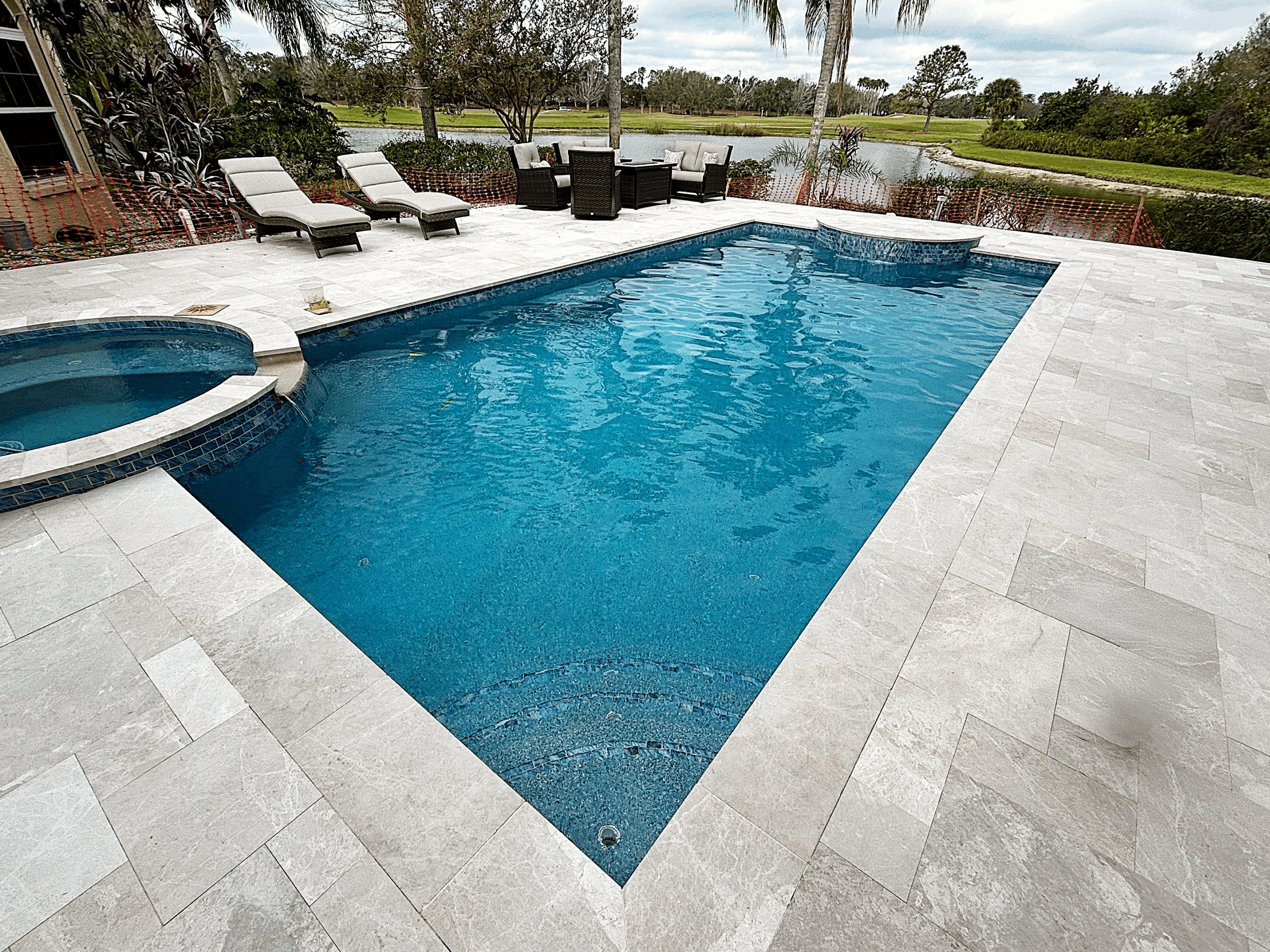
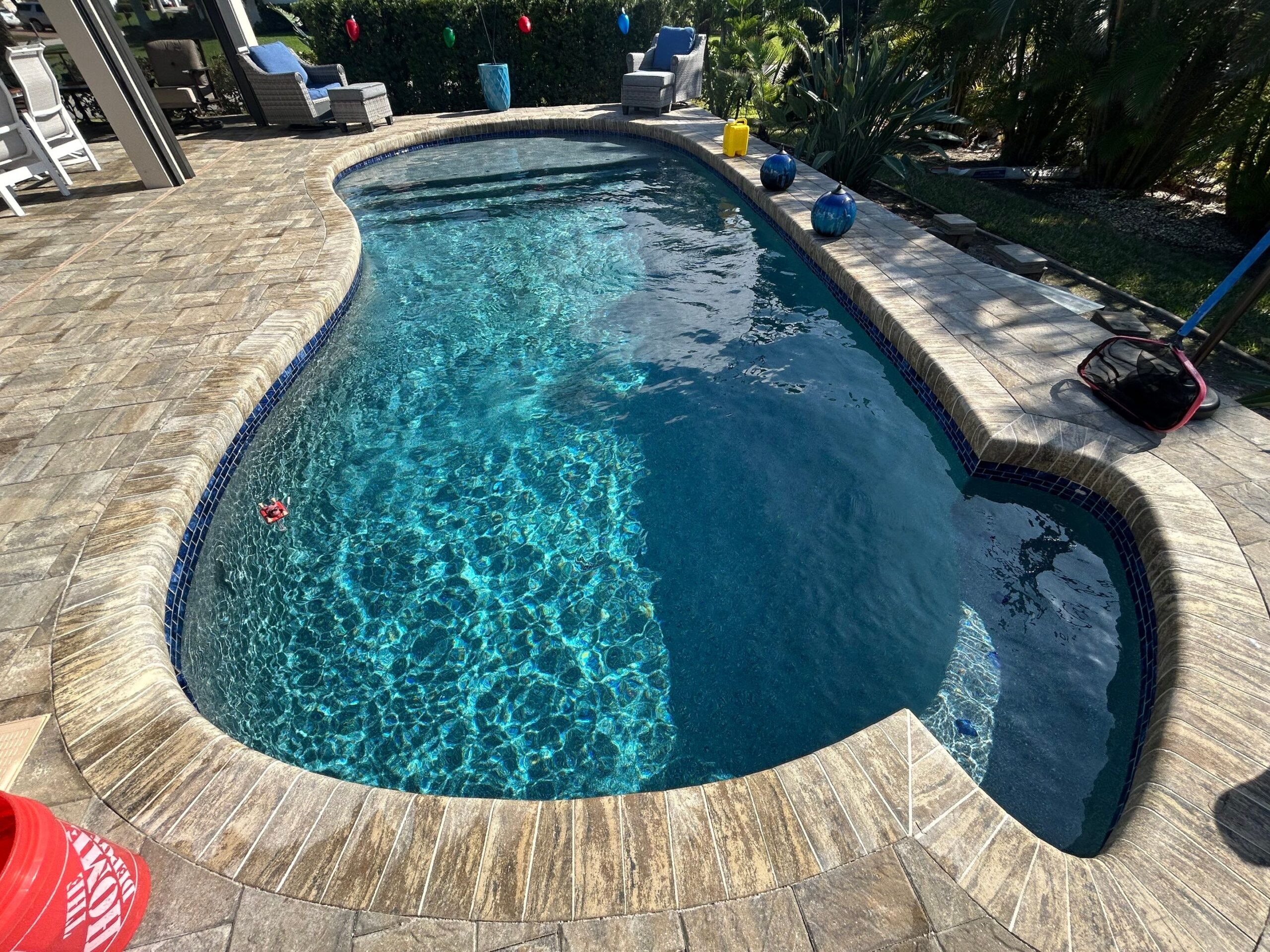
Travertine is a form of limestone created by mineral-rich springs, a material that carries both history and luxury. Its natural veining, warm tones, and textured surface create a look that feels effortlessly timeless, blending perfectly into outdoor living spaces. For homeowners seeking a high-end finish, travertine pool coping is often the go-to choice, offering both style and performance in a demanding environment.
One of travertine’s greatest advantages is its ability to stay cool underfoot. On hot, sunny days, the porous surface naturally dissipates heat, making it comfortable to walk on even at midday. Its subtle texture also adds slip resistance, enhancing safety around wet areas without sacrificing elegance. Travertine pairs beautifully with other premium finishes, from quartz-based pool interiors to Wet Edge surfaces, creating a cohesive and luxurious appearance that’s both inviting and enduring.
That said, travertine does come with a few considerations. It’s a premium investment, typically costing more than concrete options. Because it’s a natural stone, it should be properly sealed to protect against pool chemicals and saltwater exposure. Professional installation is also essential to ensure even leveling and proper drainage. When done right, though, travertine offers an unmatched blend of luxury, comfort, and durability ideal for homeowners who view their pool as an extension of their home’s architecture and lifestyle.
Concrete Pool Coping: The Durable, Customizable Choice
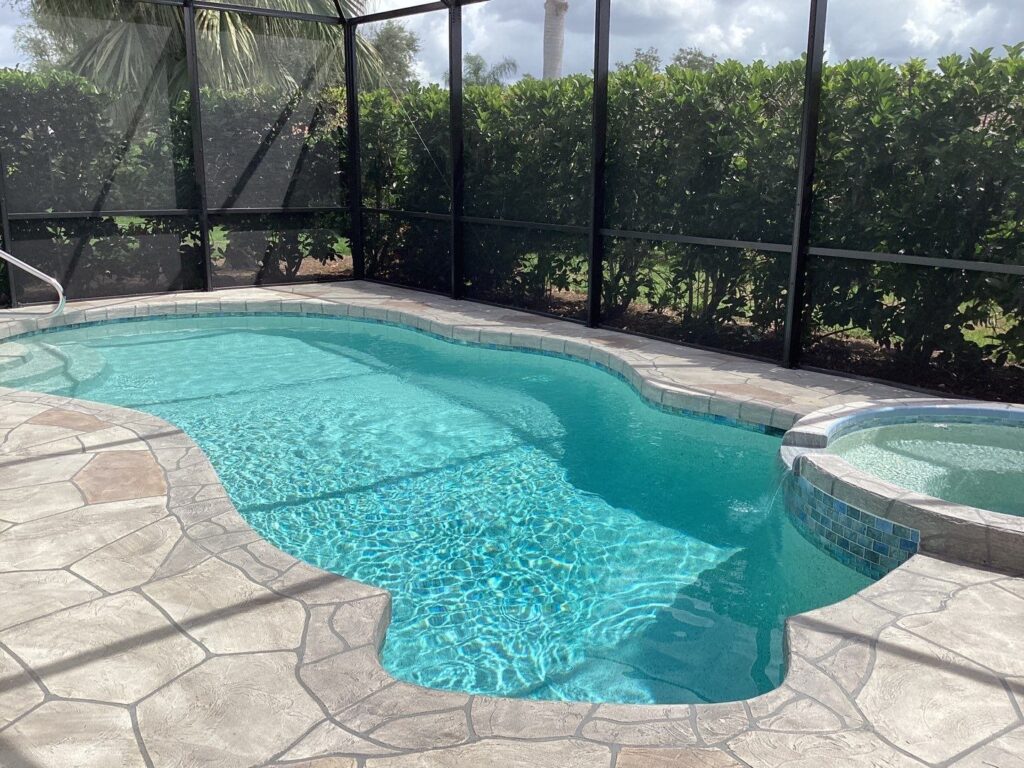
Concrete remains one of the most versatile andpractical materials availablefor pool coping. It’s known for its structural strength, ability to be shaped into nearly any form, and cost-effectiveness, a combination that appeals to both designers and homeowners alike. With modern finishing techniques, concrete can now mimic the look of stone, pavers, or textured patterns while maintaining its sturdy core.
One of concrete’s standout advantages is its design flexibility. It can be poured-in-place or precast, allowing for clean, custom edges that align perfectly with the pool’s shape. Finishes can be stamped, colored, or polished to coordinate with surrounding deck materials, whether you prefer a smooth, minimalist look or a natural stone texture. For homeowners updating older pools, this adaptability makes concrete an ideal option for creating continuity between old and new surfaces.
Concrete coping also offers the benefit of lower upfront cost and quicker installation timelines. However, like all materials, it has tradeoffs. It retains more heat than travertine, which can make it warmer underfoot on sunny afternoons. Over time, shifting soils and high humidity can lead to minor cracking, though these can often be repaired during regular maintenance or resurfacing. When sealed properly and maintained, concrete coping provides a clean, long-lasting finish that complements both traditional and contemporary pool designs.
Travertine vs. Concrete: Head-to-Head Comparison
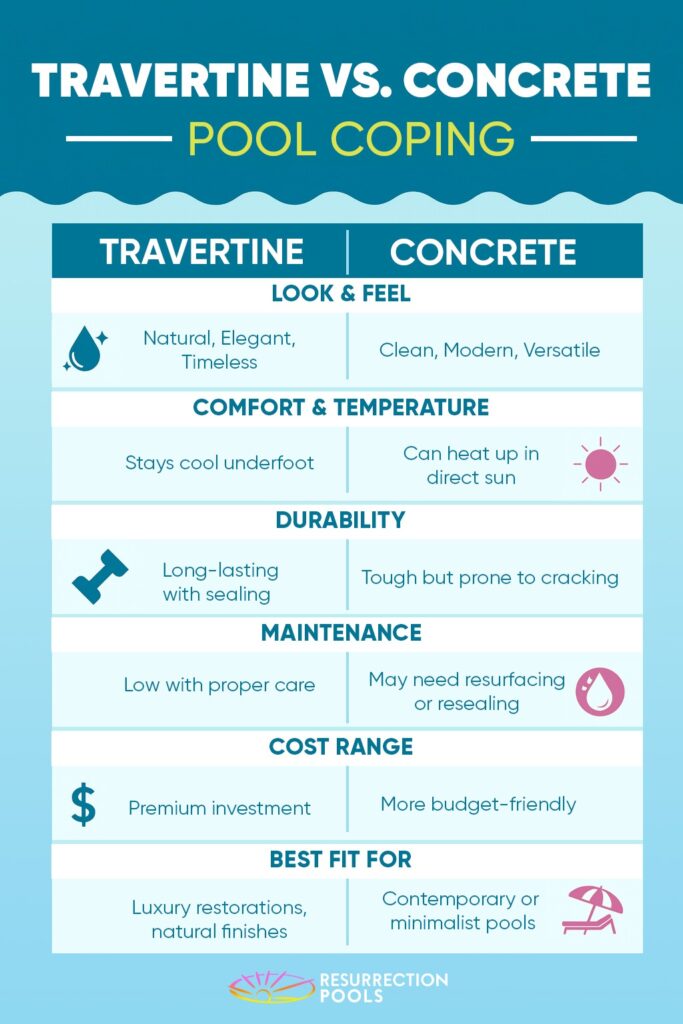
We guide every client through this decision based on lifestyle, climate, and longevity goals, ensuring that your coping not only looks stunning but performs for decades to come.
Considerations Before Choosing Your Coping Material
Before you decide on a material, ask yourself:
- How does your coping choice complement your pool deck and interior finish?
- Does your pool receive full sun exposure throughout the day?
- Are you planning a full restoration or simply replacing the edge?
- How much ongoing maintenance are you comfortable with?
- Do you value natural beauty or uniform design more?
These considerations help narrow the options and ensure your investment aligns with both your vision and your home’s environment.
The Value of the Investment
Choosing the right coping material is a smart, long-term investment in your pool’s structure and beauty. Travertine delivers timeless appeal and natural performance that elevate any restoration, while concrete provides modern flexibility and structural dependability.
We guide homeowners through this decision every day, blending expert craftsmanship with tried and tested materials that last. Our process is transparent, meticulous, and built around your goals from consultation to design selection to final installation.Schedule your complimentary consultationtoday and see how we bring pools back to life.