



Cracked Pool Plaster: What the Cracks Are Telling You and What to Do About It
A crack in a pool plaster surface can mean several different things, and the appropriate response depends entirely on which kind of crack it is. Some cracks are early-stage surface wear that can be monitored. Others indicate that the plaster has reached end of life. And some point to structural movement in the shell that requires professional repair before any surface work begins.
Florida pool owners deal with conditions that make cracked pool plaster repair more common than in most other states. Soil shifting, hydrostatic pressure, and aggressive chemistry cycles all contribute to surface and structural stress in ways that accelerate the timeline compared to national averages.
Here is how to read what your pool’s cracks are actually telling you, what causes them in Florida’s environment, and what cracked pool plaster repair involves at each level of severity.
Not All Pool Plaster Cracks Are the Same
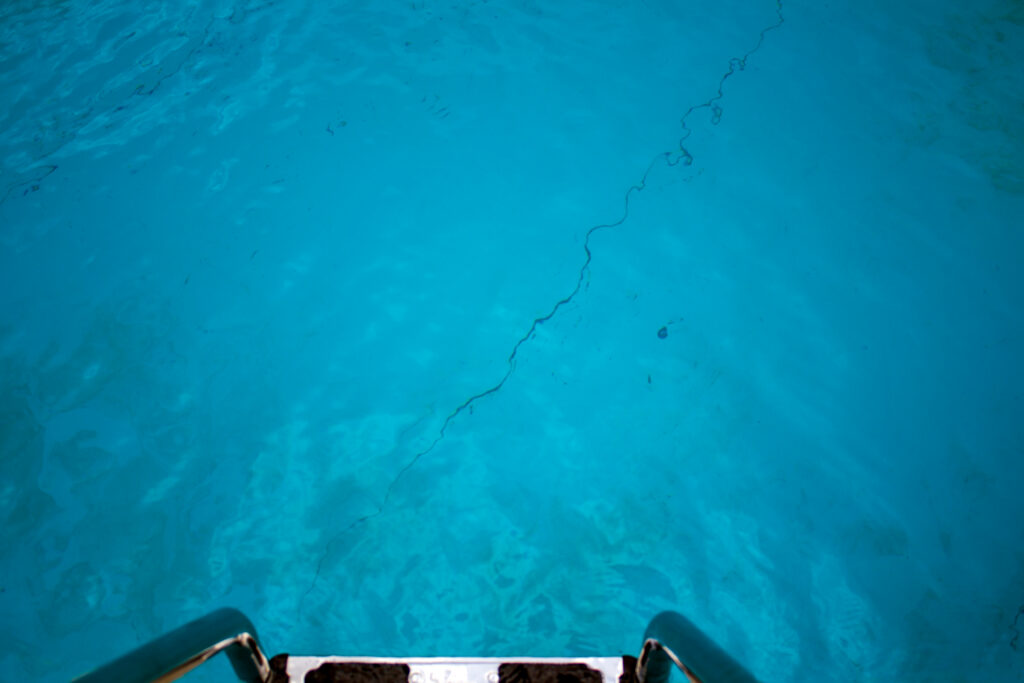
Hairline Surface Cracks
Hairline cracks are fine, shallow fractures that appear on the plaster surface. They can result from minor settling during the original curing process, normal surface wear as the plaster ages, or gradual chemical erosion that has weakened the surface layer. Early-stage hairline cracks may be largely cosmetic, but they deserve monitoring. If they are widening, deepening, or multiplying over time, the surface is advancing toward the point where cracked pool plaster repair becomes necessary.
Map Cracking or Crazing
Map cracking refers to a network of interconnected fine cracks that spread across the surface in a pattern resembling a spiderweb. This typically indicates either shrinkage during the original plaster application or a surface that has aged to the point where the plaster matrix has lost its structural cohesion. Map cracking across a significant area of the pool usually means the surface has reached end of life and full resurfacing is the appropriate response.
Structural Cracks
Structural cracks are wider, deeper, and more significant. They penetrate through the plaster layer into the pool shell itself, indicating movement in the underlying structure rather than just surface wear. Soil shifting, hydrostatic pressure, or major settling can all cause structural cracking. These are not cosmetic issues. A structural crack can allow water to escape behind the shell, which accelerates further damage and can create stability concerns. Structural cracks require professional cracked pool plaster repair that addresses the crack itself before any surface work begins.
Delamination
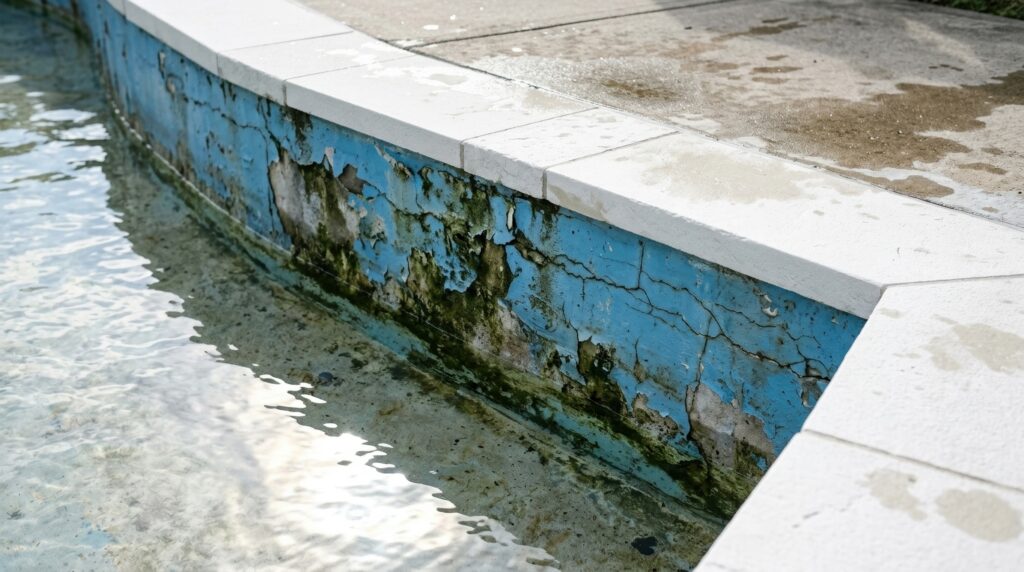
Delamination occurs when sections of the plaster physically separate from the shell surface and begin to lift or flake away. The bond between the plaster and the substrate has failed, whether due to original application issues, long-term chemical exposure, or water infiltrating behind the surface layer. Delamination cannot be patched effectively. Full resurfacing on a properly prepared substrate is the only approach that holds.
What Causes Pool Plaster to Crack in Florida
Several factors contribute to cracked pool plaster in Florida, and most work together rather than in isolation. Chemical imbalance is among the most common contributors: when pH drops into acidic territory, the water becomes corrosive and etches into the plaster surface, weakening it from within. Florida’s frequent heavy rainfall creates repeated chemistry dilution events that push pH downward, meaning Florida pool owners deal with more acid exposure over the course of a year than pools in drier climates.
Florida’s soil composition is a major factor in structural cracking. The sandy, moisture-variable soils throughout Port Charlotte, Tampa Bay, and Southwest Florida shift with moisture levels. The University of Florida IFAS Extension has documented how Florida’s variable water table and soil saturation cycles create persistent ground movement that affects structures built at grade or below it. Dry periods cause soils to contract; heavy rain causes them to expand and saturate. That repeated movement beneath the pool shell creates structural stress at any weak point in the plaster or the shell itself. Storm seasons accelerate the cycle significantly.
Hydrostatic pressure from a high water table also contributes. When the soil surrounding the pool becomes fully saturated, the pressure it exerts on the shell increases. This pressure can force cracks to widen or cause new ones to form, particularly at points where the shell already has some weakness.
What Cracked Pool Plaster Repair Actually Involves
The right cracked pool plaster repair approach depends on what type of cracking is present and how advanced it is. For isolated, early-stage surface cracks on an otherwise sound pool, localized patching can address the visible issue. However, patching on its own carries a significant limitation: the surrounding plaster is at the same age and in the same condition as the section being patched. Patch repairs often become visually inconsistent within a season or two as the surrounding surface continues to wear.
When cracking is widespread, when map cracking has developed across multiple areas, or when the surface has deteriorated past the point where patches hold reliably, full resurfacing is the appropriate response. The entire surface is removed, the substrate is prepared and any structural issues are addressed, and new surface material is applied uniformly. This resets the surface lifespan and eliminates the inconsistency that patch repairs leave behind.
For structural cracks, the repair process begins before any surface work. The crack is cleaned, stabilized, and filled using professional crack injection or structural repair methods designed to prevent further movement. Only after the structural issue is resolved can the surface be properly addressed. Attempting to resurface over an unrepaired structural crack means the crack will eventually show through or reopen the new surface.
When Cracks Signal a Bigger Problem
Two situations point toward something more serious than surface wear. The first is unexplained water loss alongside visible cracking. If the pool is losing water at a rate that exceeds normal evaporation, splash-out, and backwash, a crack may have created a path for water to escape behind the shell. This warrants professional assessment before surface repair, not instead of it.
The second is cracks that reappear in the same location after patching. Recurring cracks in the same spot typically indicate an underlying structural issue that the patch is not resolving. The movement that caused the original crack is still occurring, and it will continue to open the surface at that point regardless of how many times the area is patched.
In both cases, the appropriate first step is a thorough assessment by a restoration specialist who can evaluate both the surface and the underlying structure, not a contractor who shows up ready to patch without examining what is actually happening.
A Crack Is a Question Worth Answering
Cracked pool plaster is the pool communicating something about its condition. The message may be that the surface has reached a normal end of life and is ready for resurfacing. It may be that the original application had issues that are now showing. Or it may be signaling structural movement that needs professional attention.
The worst response is also the most common one: patching the visible crack, hoping it holds, and checking again next season. That approach delays the real answer without changing the underlying situation. An honest assessment identifies what the crack actually means and what the right scope of repair looks like.
Contact Resurrection Pools to schedule an assessment and get a clear, honest evaluation of what your pool’s cracks are telling you and what cracked pool plaster repair would involve for your specific pool.