



Pool Renovation vs. Resurfacing: What Does Your Florida Pool Actually Need?
If you have been researching options for a pool that needs attention, you have almost certainly seen the words pool renovation and pool resurfacing used as if they mean the same thing. Sometimes they do. Often they do not and the distinction matters, because choosing the wrong scope of work means either underspending on a problem that requires more attention, or overspending on work the pool does not need.
The most useful thing a Florida pool owner can do before calling anyone is understand what these terms actually refer to. That understanding makes it easier to evaluate quotes, ask the right questions, and know whether what is being proposed actually matches what the pool needs.
Here is a clear breakdown of what pool renovation and pool resurfacing each mean, how to tell which applies to your situation, and why the more important question is simply what the pool actually needs.
What Pool Resurfacing Actually Means
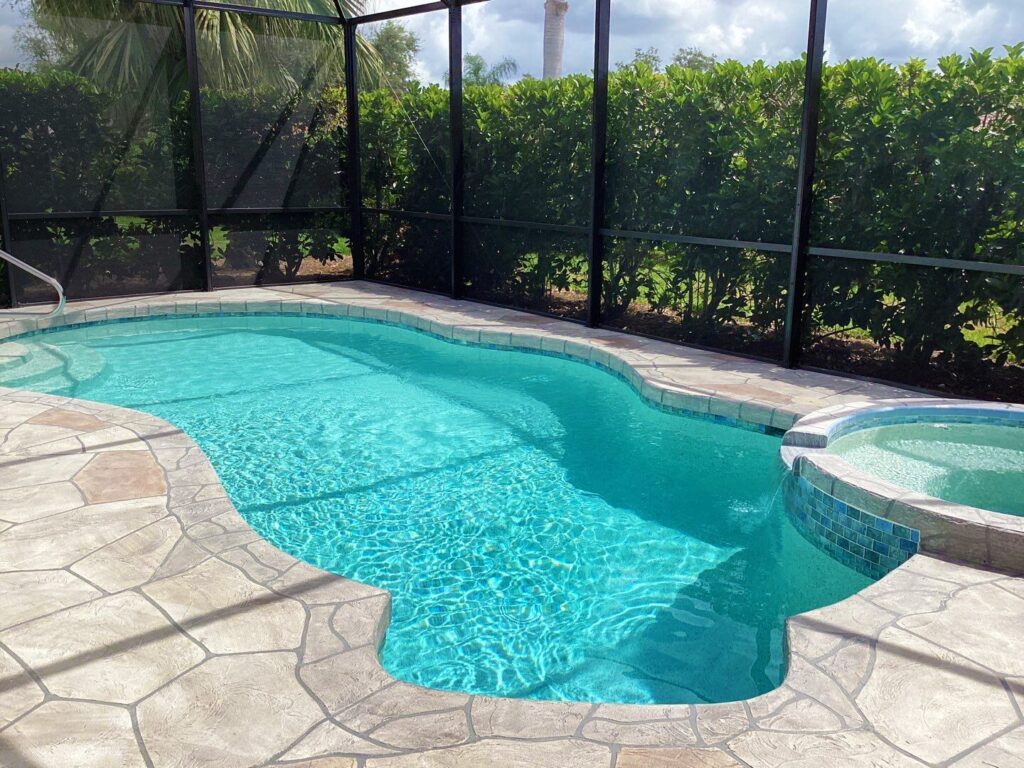
Pool resurfacing refers specifically to the interior surface of the pool. The existing plaster or aggregate material is removed, the shell substrate is prepared, and a new surface material is applied. That is the full scope. Nothing outside the interior surface is included in a standard resurfacing project.
The surface material options are plaster, quartz aggregate, and pebble or polished aggregate finishes. Each carries a different price point, appearance, and lifespan in Florida’s climate. Plaster is the most affordable and has the shortest lifespan at roughly 7 to 10 years. Quartz finishes last 12 to 15 years. Premium pebble aggregate finishes can last 15 to 20 years with proper maintenance. The Pool and Hot Tub Alliance offers additional guidance on surface materials and pool care standards for homeowners who want a broader industry reference.
Resurfacing is the right scope when the surface itself has deteriorated, whether that means rough texture, persistent staining, cracking, delamination, or recurring algae, and the rest of the pool is otherwise in reasonable condition. If the tile, coping, deck, and equipment are performing well, surface-focused work may be all that is warranted.
What Pool Renovation Actually Means
Pool renovation is a broader term that typically refers to cosmetic and functional improvements that go beyond the interior surface. Tile replacement. New or repaired coping. Deck resurfacing or replacement. Equipment upgrades, including pumps, filters, heaters, and automation systems. Added features such as sun shelves, water features, lighting, or integrated spas.
Pool renovation may or may not include resurfacing. A homeowner can renovate the deck and coping without touching the interior surface, or can undertake a full renovation that includes resurfacing alongside everything else. The word renovation describes scope breadth, not a specific fixed set of tasks.
Renovation makes sense when the pool’s cosmetic or functional issues extend beyond the surface, when outdated aesthetics are driving the project as much as surface wear, or when equipment performance has declined to the point where it is affecting the pool’s efficiency and reliability.
Signs That Point Toward One vs. the Other
A pool that primarily needs resurfacing tends to show surface-specific symptoms: rough plaster against bare skin, staining that does not respond to chemical treatment, visible cracking or chipping, delamination, or algae that returns immediately after treatment. The deck looks fine. The tile is in reasonable shape. Equipment is working. The problem is the surface.
A pool that warrants broader renovation tends to show a wider picture: tile that is cracked, lifting, or simply dated. Coping that is chipping or separating. A deck that is cracking, fading, or no longer level. Equipment that is aging, inefficient, or underperforming. When multiple systems are showing wear at once, addressing only the surface leaves the rest of the decline in place.
In practice, many Florida pools show both patterns at the same time. A surface that has worn through its useful life is often accompanied by tile that is at a similar age and equipment that has been running for the same number of years. The symptoms overlap more often than they separate cleanly.
Why the Label Matters Less Than the Scope
The real question is not whether a pool needs renovation or resurfacing. The real question is what the pool specifically needs, assessed honestly by someone who has looked at the whole thing. A pool renovation that does not include resurfacing may leave the interior surface to fail within a few seasons. A resurfacing project that ignores failing coping or aging equipment addresses only part of what is causing problems.
Labels are also used inconsistently across contractors. One company’s pool renovation package may include resurfacing as a default while others may not. One contractor’s resurfacing scope may include tile as standard; another may treat it as a separate line item. What is actually included in the proposed work matters far more than what it is called.
Before committing to any scope of work, it is worth asking specifically what is and is not included, what has been assessed, and what the reasoning is behind what has been recommended. A contractor who can explain clearly what the pool needs and why is worth trusting more than one who hands over a fixed package without examining what the specific pool actually requires.
How Resurrection Pools Approaches This
At Resurrection Pools, every project begins with an honest assessment of the whole pool, not a pre-labeled package. That means evaluating the surface condition, tile and coping, deck, equipment, and any structural considerations before recommending what should actually be in scope.
If the surface is the only issue, the project addresses the surface. If the pool needs a broader restoration scope, that scope is defined by what the pool actually needs rather than by a default renovation package. Every project is a full restoration in the sense that it addresses everything that genuinely warrants attention, and only that.
For Florida homeowners in Port Charlotte, Tampa Bay, and the surrounding area, that approach means the project gets done right the first time, without returning to address things that were left out of a narrower initial scope.
The Question Worth Asking First
Pool renovation and pool resurfacing describe different scopes of work, and understanding that difference puts you in a much stronger position when evaluating options. But the most useful framing is not which label applies to your situation. It is what your pool specifically needs, assessed by someone who has actually looked at it.
A pool that looks like it needs resurfacing may also have structural issues that were invisible until the surface was examined closely. A pool that seems to need full renovation may actually be in better shape than it looks, with surface work as the primary driver. The only reliable way to know is a direct assessment.
Frequently Asked Questions
What is the difference between pool renovation and pool resurfacing?
Pool resurfacing refers specifically to the interior surface: removing the old plaster or aggregate and applying a new surface material. Pool renovation is a broader term that can include resurfacing but also covers tile, coping, deck, equipment upgrades, and added features. Resurfacing is often one component of a pool renovation, but the two terms are not interchangeable.
Do I need pool renovation or just resurfacing?
It depends on what the pool actually needs. If the surface is rough, stained, or cracking but tile, coping, deck, and equipment are in reasonable shape, resurfacing may be sufficient. If multiple systems are showing wear at the same time, a broader renovation scope is likely more practical. An assessment by a restoration specialist is the most reliable way to know.
Does pool renovation always include resurfacing?
Not necessarily. Some renovation projects focus entirely on deck, tile, coping, or equipment without touching the interior surface. Others include resurfacing as a central component. What is included depends on the specific project scope, which should reflect what the pool actually needs rather than a fixed package.
How much does pool renovation cost compared to resurfacing?
Surface-only resurfacing in Florida typically ranges from $4,000 to $18,000 or more depending on the material selected and pool size. A broader renovation scope that includes tile, coping, deck work, and equipment adds to that baseline depending on what is being addressed. An itemized estimate after a proper assessment gives the most accurate picture.
If your Florida pool is showing signs of wear and you want an honest picture of what it actually needs, schedule a consultation with Resurrection Pools to assess your pool from surface to equipment and put together a restoration plan that matches what it actually needs.